
The material is an overview of three key temples of Busan — Beomeosa (범어사), Haedong Yonggungsa (해동용궁사), and Samgwangsa (삼광사). The article describes their unique location — in the mountains, by the sea, and on the urban slope — architectural features and cultural role. The text is supplemented with micro-observations about visiting times, everyday details, and routes, emphasizing that the temples act not as tourist attractions but as stable cultural landmarks of the city.
Busan temples: layout, access, context
The simple plan is to mark three dots on a map and go in sequence. Not quite. Each site sits in a different landscape and that changes pace, sound, even how you read signs. Beomeosa (범어사) holds the north on Geumjeongsan, Haedong Yonggungsa (해동용궁사) faces the open water near Gijang, Samgwangsa (삼광사) folds into the hills above central districts. Access is straightforward: metro to foothills, short local buses to gates, a few minutes on stone steps. Early morning brings vendors arranging herbs at village stalls; late afternoon the light clears and crowds thin. This is a compact Busan travel guide to a single layer of the city – sacred, routine, visible. Among Buddhist temples in Busan the trio forms a usable frame: mountain, coast, urban ridge. A note on order: start inland, finish at the sea, then return to the hillside for dusk; the city’s ring-roads make that loop efficient.
Beomeosa (범어사) – history and architecture
First impression: granite and quiet courtyards; second, the mountain stream correcting your pace. Founded in the Silla era, the complex reads as a sequence – Iljumun gate, courtyards, lecture halls, side hermitages. Timber brackets carry broad roofs that sit low against the slope, an engineering choice before an aesthetic one. On weekday mornings hikers step aside for novices carrying offerings; shoes align in tidy rows. Trails radiate to Geumjeongsan’s fortress wall, so arrivals are staggered, and departures gentler than planned. For structure, note the axial path, the subsidiary shrines, the granite platforms that stay dry even after rain. Temple-stay notices appear on discreet boards; even if you do not join, they explain schedule and rhythm. When clouds drop, the valley filters sound, and bells travel farther than voices. Reach the site by metro toward the northern districts, then transfer to a short hill bus; the final ascent on foot is brief but steady.
Haedong Yonggungsa (해동용궁사) – temple by the sea
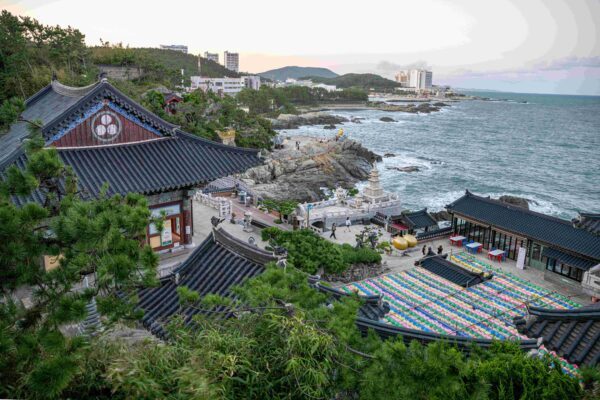
The coast demands different timing. Before 9 a.m. the footbridge is almost empty, and the sound under the cliffs presses everything into shorter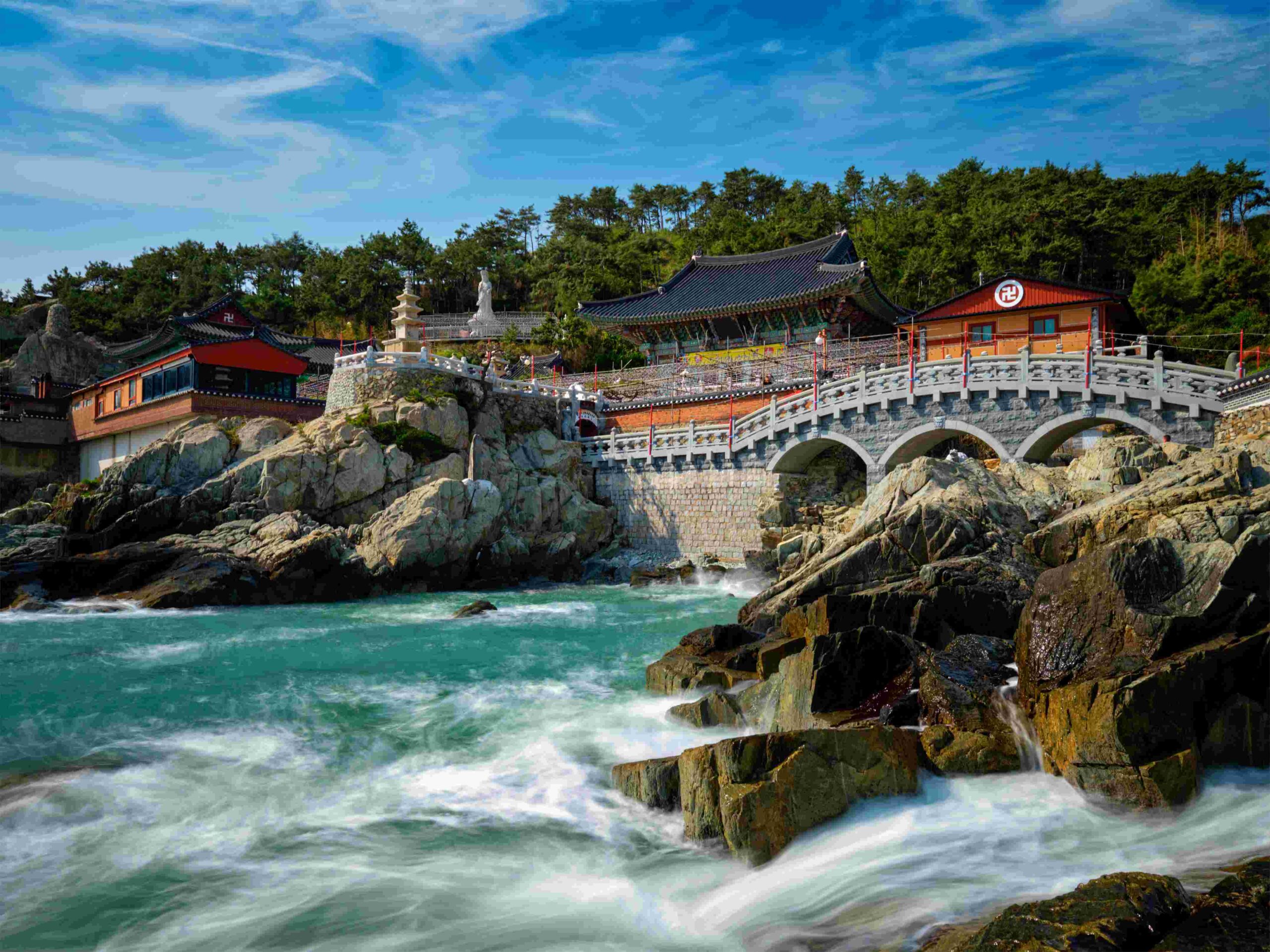 sentences. Here the sequence reverses – steps down first, prayer later. Zodiac statues line the path; lanterns lean toward the wind; cameras pause at the main terrace and then, unexpectedly, turn to the fishermen beyond. The temple’s claim is not height but horizon, which is why winter suits the visit as well as spring. Look for small niches cut into rock with incense stubs, a practical note in a dramatic setting. During holidays, lines for the bridge loop back toward the parking terraces; midday stalls appear, then vanish as the tide changes. City buses run along the coast, and rides take longer than the distance suggests; a taxi for the final stretch can save daylight. Stairs are well kept, though spray can slick the lower steps after storms.
Samgwangsa (삼광사) – festivals and cultural role
In the evening the slope above town steadies into a grid of lanterns; after a minute you realize the pattern is a plan, not decoration. Samgwangsa serves everyday practice, but each spring its lantern festival turns the terraces into tiers of light. The climb from central districts is simple, the effect cumulative – plaza, stairs, then the main hall balcony that faces the city. Volunteers manage flow with minimal signage, and vendors wait outside, which keeps the courtyards calm even at peak. Between study rooms and prayer halls the campus logic shows: clear routes, resting platforms, water taps where people actually stop. Arrive slightly before dusk, leave after the first hour of dark; buses handle the load better in that window.
Top 3 Temples in Busan
- Beomeosa (범어사): mountain monastery with layered courtyards; best before 10 a.m. on clear days; metro to the foothills, short bus to the gate. Note streams beside the path and the shoe rows outside the main hall.
- Haedong Yonggungsa (해동용궁사): seaside terraces and a bridge over surf; best at sunrise or in winter light; coastal buses, allow extra time. Watch spray on lower steps and the small rock niches with incense.
- Samgwangsa (삼광사): urban hillside complex known for spring lanterns; best after dusk before crowds peak; city buses from Seomyeon and nearby hubs. Terraces stack like balconies, and volunteers guide flow without haste.
Use this trio as a compass: mountain, sea, hillside. The sequence reads the city back to you, and the day – if paced well – leaves room for more.
Comments are closed